If you want to grow on LinkedIn, you need a system. It really just boils down to three things: a solid profile, content that actually helps people, and consistently showing up in your network. Get these right, and your profile stops being a dusty old resume and starts pulling in opportunities for you.
Why LinkedIn Engagement Is Your Biggest Opportunity
Let’s be real—just “being active” on LinkedIn isn’t enough anymore. If you want to be seen, you have to engage in a way that means something. It’s the engine that builds your personal brand, brings interesting projects your way, and creates a network that’s working for you, even when you’re not online.
This guide breaks it all down into a six-part framework. We'll get into the nuts and bolts of how the LinkedIn algorithm actually works and show you how to make it work for you. The goal is to turn your profile into a magnet for leads, collaborations, and career moves.
The Foundation of Engagement
At its core, engagement is a conversation. It’s not about shouting your message into the void; it's about starting dialogues. Every comment, every share, and every thoughtful reply you leave tells the algorithm that what you’re putting out there is valuable, which in turn gets your content in front of more people.
It’s a simple flow, really.
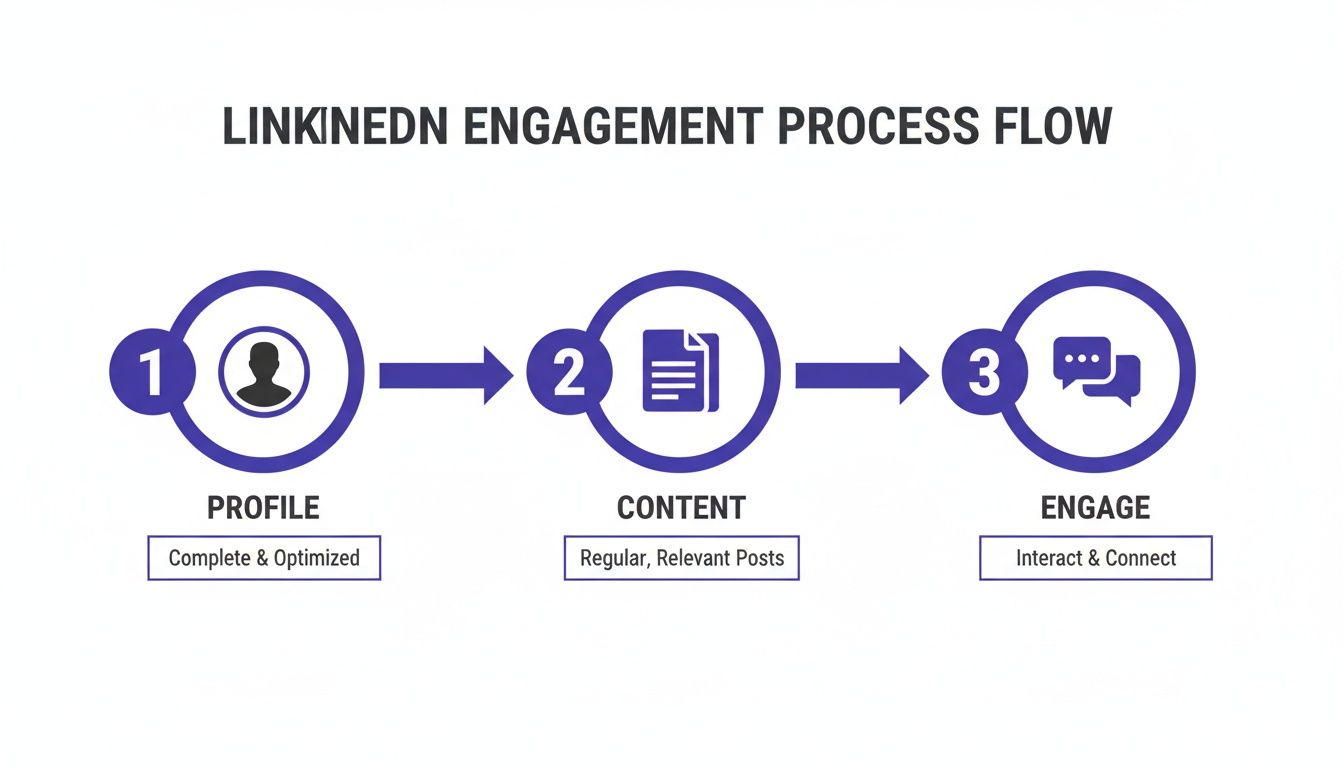
It all starts with a strong profile. That foundation allows you to create compelling content, which then fuels the active engagement that gets you noticed.
The LinkedIn Engagement Framework At a Glance
To give you a bird's-eye view of where we're headed, I’ve broken down my entire system into six core pillars. This is the exact framework I use and teach to turn passive scrolling into active opportunity-building.
| Pillar | Key Action | Why It Works |
|---|---|---|
| Pillar 1: Profile & Hooks | Optimize your profile to act as a high-conversion landing page. | A clear, compelling profile turns casual visitors into followers and leads. |
| Pillar 2: Ideation | Generate a steady stream of relevant, valuable content ideas. | Never run out of things to say and consistently address your audience's pain points. |
| Pillar 3: Content Formats | Choose the right format (text, image, video) for your message. | Different formats resonate differently; variety keeps your audience engaged. |
| Pillar 4: Writing & Editing | Craft clear, concise, and engaging copy that stops the scroll. | Good writing is the foundation of all great content. It builds authority and trust. |
| Pillar 5: Cadence & Workflow | Post consistently and engage with your network systematically. | The algorithm rewards consistency, and a workflow makes it manageable. |
| Pillar 6: Measurement | Track what works, ditch what doesn't, and double down on wins. | Data-driven decisions take the guesswork out of your content strategy. |
Think of these pillars as the building blocks for a powerful presence on the platform. We'll dive deep into each one, but this table gives you the strategic overview.
The Algorithm Rewards Activity
The data doesn't lie—this stuff works. LinkedIn's median engagement rate recently jumped from 6.00% to 8.01%, and pages that post just once a week see 5.6 times more follower growth. The algorithm is literally designed to boost active, consistent profiles.
This isn’t just about getting bigger numbers; it’s about building momentum. When you show up consistently with valuable insights and interact with others, you build the kind of trust and authority that pays dividends.
The goal isn't just to be seen, but to be remembered and sought after. Meaningful engagement builds professional equity that compounds over time, opening doors to opportunities you might not even know exist.
While we're focused on LinkedIn here, it's always smart to understand the bigger picture. Exploring some proven tips for social media engagement can give you a broader perspective. This guide, however, is your specific roadmap for making it happen right here on LinkedIn.
Let's get started with the first pillar.
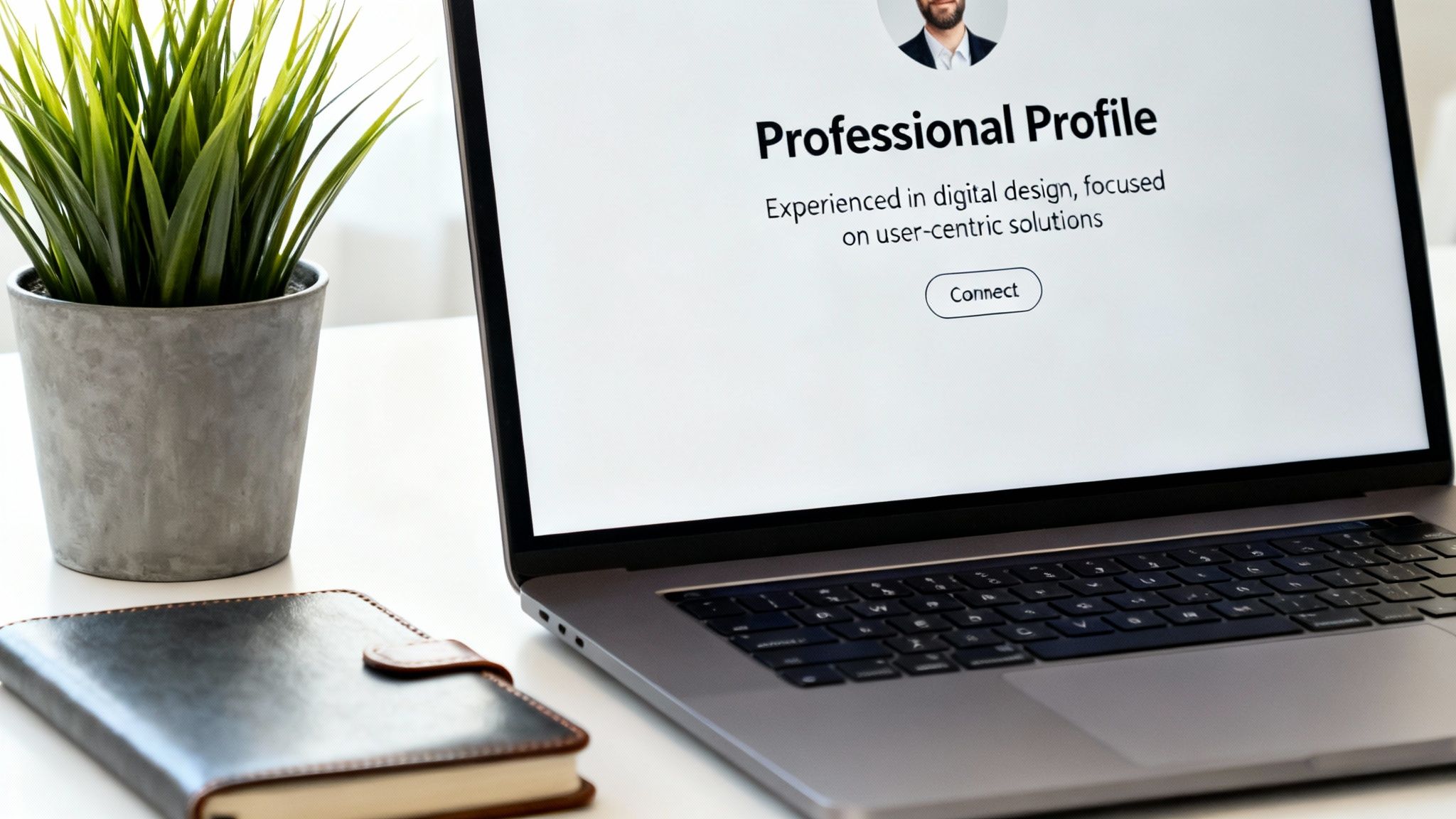
Build a Profile That Invites Connection
Before you write a single post, we need to talk about your LinkedIn profile. Seriously. Too many people skip this step, and it costs them followers.
Think of your profile less like a resume and more like a personal landing page. Its one and only job is to answer a visitor's silent question: "What's in it for me?"
If your profile is just a dry list of job titles, you're leaving opportunity on the table. A great profile is your silent partner, working 24/7 to build trust and give people a reason to care about what you have to say. When someone likes your content, their next move is almost always a click over to your profile. You’ve got maybe three seconds to make them glad they did.
Write a Headline That Sparks Curiosity
Your headline is the most valuable piece of real estate on your entire profile. It follows you everywhere—in comments, connection requests, and search results. Don't waste it with just your job title.
Instead, craft a headline that tells people who you are, who you help, and the result you deliver. It needs to be readable for humans but also have the right keywords for people searching for your expertise.
For example, instead of "Marketing Manager at Company X," try something like:
- "Helping B2B SaaS Founders Build Lead-Gen Machines | Content Strategy & SEO"
- "Career Coach for Tech Professionals | I Help You Land Your Dream Job in 90 Days"
See the difference? These are specific, outcome-focused, and they immediately tell the right person they’ve found the right profile.
Your headline isn't just a title; it's a promise. It sets the expectation for the value you'll deliver, making it the foundation of your entire engagement strategy.
Tell a Story in Your About Section
This is your chance to be a human, not a list of bullet points. Your "About" section is where you can finally tell your professional story. Make it scannable, and lead with a hook that grabs attention right away.
Don't just list what you do—explain why you do it. Share a short story about a big challenge you overcame or a lesson that stuck with you. This is how you create an emotional connection, and connection is what drives real engagement. Finish it off with a clear call-to-action, like inviting people to connect or pointing them to your featured content.
Activate Creator Mode
Flipping this switch is one of the easiest, most powerful things you can do for your profile. It’s a setting on LinkedIn that signals to the world that you’re here to create and share.
Turning on Creator Mode does two key things. First, it changes your main button from "Connect" to "Follow," which encourages people to see your content without a formal connection request.
Second, it lets you display up to five "Talks About" hashtags right under your headline. These are gold. They tell both people and the LinkedIn algorithm what your topics of expertise are, helping your content find a more relevant audience. Choosing hashtags like #ContentStrategy or #LeadershipDevelopment immediately puts you in the right conversations and makes it way easier to connect with the right people.
Create Content That People Actually Want to Read
Real engagement happens the moment someone stops scrolling. If you want to boost your numbers, you have to create content that gives them a compelling reason to pause. Forget the generic company updates or dry industry news; your audience is scrolling for value, human connection, and a perspective they haven't heard before.
The secret isn't some groundbreaking idea every single day. It's about building a repeatable system around a few core content pillars that you know will perform. When you have a framework, generating ideas that resonate becomes second nature, and you'll never feel like you're starting from a blank page again.
The Power of Your Content Pillars
Think of content pillars as the core themes you want to be known for—the topics you can speak about with genuine authority and passion. Most of the successful creators I see on LinkedIn operate from three primary pillars. This approach helps them build trust, spark conversations, and cement their expertise.
Here’s a simple framework to get you started:
- Personal Stories and Lessons Learned: These posts are all about building trust and humanizing your brand. Share a story about a mistake you made and the lesson it taught you, a challenge you overcame, or a key moment that shaped your career. People connect with people, not just job titles.
- Contrarian Takes and Debates: Gently challenge a commonly held belief in your industry. A post that starts with, "Everyone thinks X is the key, but the real truth is Y..." is almost guaranteed to get people talking. The goal isn't to be argumentative, but to spark a thoughtful discussion and show you’re a critical thinker.
- Actionable Insights and How-Tos: Give your audience something they can use right now. This could be a quick tip, a simple framework, or a step-by-step guide to solving a common problem. This type of content positions you as a generous expert and is incredibly shareable.
By cycling through these three pillars, you create a balanced content mix that keeps your feed interesting. It gives your audience different ways to connect with you. For more inspiration, check out our guide on powerful LinkedIn post examples that nail these principles.
Master the Art of the Scroll-Stopping Hook
You have less than two seconds. That’s it.
The first line of your post—the hook—is the most critical part of your writing. If it doesn't make someone want to click "...see more," the rest of your brilliant post might as well not exist. A great hook creates an open loop in the reader's mind, making them curious to find out what happens next.
Your hook is a promise to the reader. It sets an expectation that the rest of the post will be valuable, insightful, or entertaining. Fulfilling that promise is how you build a loyal audience that trusts your content.
Here are a few hook formulas that work wonders:
- The "Mistake" Hook: "I made a $10,000 mistake so you don't have to."
- The "Unexpected Truth" Hook: "The most productive people I know don't manage their time. They manage their energy."
- The "Direct Question" Hook: "What's one piece of career advice you'd give your 22-year-old self?"
These hooks tap directly into curiosity, relatability, and the universal desire for self-improvement. They pull the reader in and make them an active participant instead of just a passive scroller.
Choose the Right Format for Your Message
Once you have your idea and your hook, you need to decide how to deliver it. The format you choose can dramatically change how your message lands and how much engagement it gets. While a simple text post can be incredibly powerful, mixing things up keeps your content fresh and appealing.
For instance, video is an absolute powerhouse on LinkedIn, often generating up to 5 times more engagement than static posts. If you’re comfortable on camera, live videos can pull in a staggering 24 times the engagement. This makes visual content a non-negotiable part of a serious engagement strategy.
Deciding which format to use can feel overwhelming, so I've put together a quick comparison to help you choose the right tool for the job.
Content Format Engagement Potential
This table breaks down the typical performance of different LinkedIn content formats to help you prioritize your creation efforts.
| Content Format | Typical Engagement Level | Best For |
|---|---|---|
| Text-Only Posts | Medium to High | Telling personal stories, sharing contrarian takes, and asking engaging questions. |
| Image/Carousel Posts | High | Visualizing data, sharing step-by-step guides, or showcasing behind-the-scenes content. |
| Video Posts (Native) | Very High | Demonstrating a process, sharing personal insights with more emotion, or conducting short interviews. |
| Polls | High (Initial Burst) | Quickly gathering audience opinions, starting a debate, or validating an idea. |
| Documents (PDFs) | Medium | Sharing in-depth guides, case studies, or presentation slides. |
Ultimately, the key is to match the message to the medium. A complex framework is much easier to digest as a carousel or document, while a heartfelt story truly shines in a text post or a short video.
To make this whole process smoother, exploring AI tools for content creation and marketing can be a huge help. They can assist in producing high-quality assets like videos and graphics more efficiently, letting you focus on the core message that actually drives engagement.
Nail Down a Realistic Posting and Engagement Habit
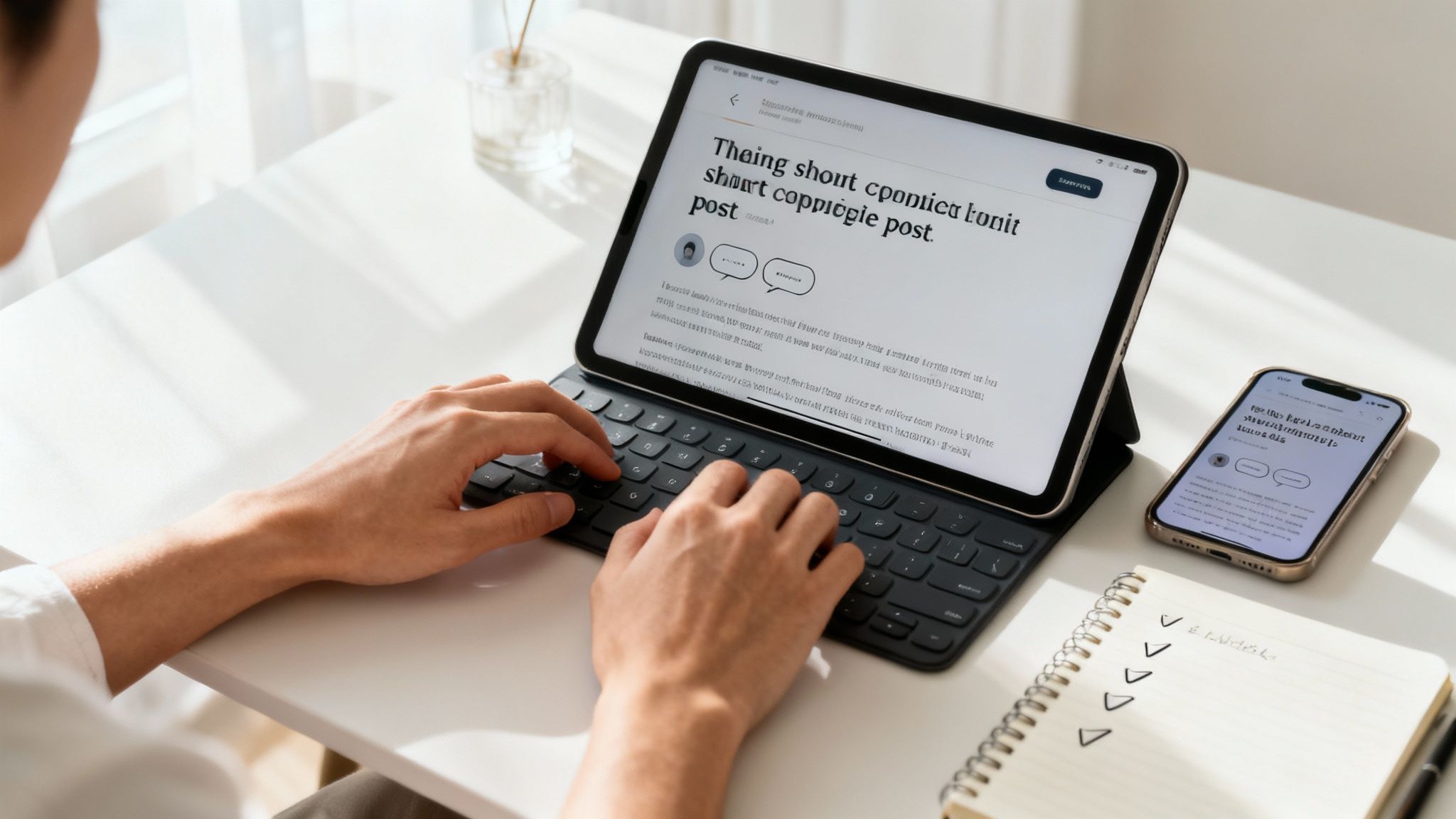
Putting out great content is only half the job. If you’re just posting whenever you feel like it, you’re trying to build a fire with damp wood—it’s never going to catch. The real secret to boosting your engagement is finding a sustainable rhythm you can actually stick to, turning your LinkedIn activity into a powerful, reliable habit.
On LinkedIn, momentum is everything, and it's built through consistency. The algorithm rewards people who show up regularly, but "regularly" doesn't mean you have to be on there every single day. The trick is to find a cadence that works for you and lock it in. Ditch the "all or nothing" mindset. That’s the first step to a strategy that actually lasts.
Find Your Sustainable Posting Rhythm
Trying to post every day when you realistically only have time for three posts a week is a fast track to burnout. It's so much better to publish three high-quality pieces consistently than to blast out seven mediocre ones for a week and then vanish for a month.
Be honest with yourself. Take a hard look at your actual calendar. Where can you realistically block out time for this?
- The 3-Day Power Week: This is a great starting point. Post on Monday, Wednesday, and Friday. It gives your content some breathing room and keeps you on your network's radar all week.
- The Daily Check-In: If you’re brimming with ideas, posting once a day during the work week (Monday-Friday) can seriously accelerate your growth.
Once you pick a schedule, commit to it for 30 days. That’s long enough to build the habit and get some real data on what's connecting with your audience. Tools like PostFlow are built for this, letting you schedule your content in batches so you can maintain that rhythm without the daily grind. To really dial it in, check out our guide on the best time to post on LinkedIn.
Your biggest asset is a posting schedule you can actually sustain. It's not about short bursts of intensity; it's about consistency. Both the algorithm and your audience will reward you for being reliable.
The Other Side of the Coin: Your Outbound Workflow
Posting is just broadcasting. Real engagement is a two-way street. The other, equally critical, piece of the puzzle is proactively interacting with your network. This is how you build actual relationships and show the algorithm you’re an active, valuable part of the community.
And no, this doesn't need to take hours. A focused 15-minute daily workflow is all you need to make a huge difference. The goal here is quality, not quantity—leaving comments that actually add to the conversation, not just take up space.
Your 15-Minute Daily Engagement Plan
Break your 15 minutes into three focused five-minute sprints. This little system keeps you efficient and makes sure you're hitting all the right notes.
Block 1: Engage with Key Influencers and Prospects (5 Minutes)
- Action: Head to the profiles of 3-5 key people in your world—industry leaders, potential clients, or peers you respect.
- Goal: Drop a thoughtful, value-add comment on their latest post. Ask a clarifying question, share a related insight, or build on their point. This gets you on the radar of people who matter.
Block 2: Nurture Your Existing Network (5 Minutes)
- Action: Just scroll through your main feed. Find posts from your current connections that grab your attention.
- Goal: Leave 3-5 genuine comments. These can be simpler—congratulate someone on a win, agree with a solid point, or share a quick personal story. This is all about keeping your relationships warm.
Block 3: Respond to Your Own Comments (5 Minutes)
- Action: Go to your own most recent post and reply to every single comment. No exceptions.
- Goal: Acknowledge every person who took the time to engage. Answer their questions, thank them, and "like" their comments. This simple act encourages more people to jump in and gives your post an extra visibility boost.
This simple workflow is a game-changer. It shifts your focus from just being a content creator to being a community builder. By consistently adding value to other people's conversations, you not only build stronger relationships but also drive more traffic back to your own profile and content. It's a powerful feedback loop that fuels your growth and cements your presence on the platform.
Turn Engagement Into Meaningful Opportunities
Likes and comments are a great sign that your content is hitting the mark, but let's be real—they aren't the finish line. They're the starting pistol. The real magic in a LinkedIn strategy happens when you turn those fleeting interactions into genuine conversations, solid professional relationships, and actual opportunities.
This is the moment you shift from just being a content creator to becoming a community builder. Every single comment is an open door to a deeper discussion. Firing off a quick "Thanks!" is a massive missed opportunity. Your mission is to add a spark that keeps the conversation alive, both in public and, when the time is right, in private.
From Public Comments to Private Conversations
The secret to responding to comments is to add value and ask a question. Acknowledge what they said, then gently nudge the conversation forward. Your reply should be an invitation for them to respond again, not a dead end.
Think about it this way: if someone complimented a presentation you gave, you wouldn't just mumble "thanks" and walk off. You'd probably ask something like, "Thank you! Was there a specific part that resonated with you?" The same exact principle works on LinkedIn.
Your comment section is the most underrated networking tool you have. Treat it like a roundtable discussion where you're the host. Your job is to make everyone feel heard and encourage them to share more.
Here are a few simple lines you can adapt for your own use:
- Acknowledge & Ask: "Great point about [their specific insight]. I'm curious, how have you seen that play out in your own work?"
- Add Value & Inquire: "I'm so glad you found this helpful. On a related note, have you ever tried [related technique]? I've seen some interesting results with it."
- Share a Resource: "That’s an excellent question. I actually wrote a bit more about that concept here [link to a blog post or another resource]. Would love to know your thoughts."
These replies do more than just acknowledge the person; they validate their contribution and give them a compelling reason to stick around. This is how you build rapport and show you actually care about what your audience has to say.
Knowing When to Slide into the DMs
So, when is it the right time to take a conversation from a public comment to a private direct message? The key is to have a legit, non-salesy reason. You never want your outreach to feel like a bait-and-switch, where a friendly chat suddenly becomes a hard pitch.
Here are a few clear signals that it’s time to send a connection request and a thoughtful DM:
- They Ask a Specific, Detailed Question: If someone asks something in the comments that calls for a long or sensitive answer, that's your perfect opening.
- You Spot a Clear Synergy: Their comment might reveal a shared professional interest, a potential collaboration, or a problem you know you can help solve.
- They've Engaged Multiple Times: If the same person consistently leaves insightful comments on your posts, they're clearly invested in what you're doing.
The transition should feel natural and helpful. A simple, well-worded message can make all the difference.
Example DM You Can Use:
"Hey [Name], I really appreciated your thoughtful comments on my post about [topic]. Your question about [specific detail] got me thinking, and I wanted to share a resource/thought that was a bit too long for the comments. No pressure at all, but I thought you might find it valuable. Cheers!"
This approach is all about generosity. You're offering value without asking for a single thing in return, which is the bedrock of building strong professional relationships. This method ensures you’re building bridges, not burning them, one meaningful conversation at a time. It’s the ultimate way to convert your visibility into real-world results.
Measure Your Impact and Refine Your Approach

If you're not tracking your efforts, you're just guessing. Pouring time into creating content without knowing what works is like driving with your eyes closed. This final step is what separates the pros from the amateurs: measuring what’s actually moving the needle and letting data, not your gut, guide your next moves.
This creates a powerful feedback loop. Once you start understanding your analytics, you can stop wasting energy on content that falls flat and double down on what truly resonates with your audience. The goal isn't just to post more—it's to post smarter.
Look Beyond Likes and Comments
Vanity metrics like likes and comments feel great, but they don't paint the full picture. To really get a handle on your performance, you need to dive into LinkedIn’s native analytics and focus on the data that signals real growth.
Here are the key metrics I always watch:
- Impressions: This is simply the total number of times your post was shown to people. Are your impressions trending up, down, or staying flat? A steady increase means the algorithm is starting to favor your content.
- Engagement Rate: This is your total engagements (likes, comments, shares) divided by your impressions. It’s a crucial measure of how compelling your content actually is to the people who see it.
- Profile Views: A spike in profile views right after you post is a huge green flag. It means your content was interesting enough to make people curious about you. This is often a leading indicator for new followers and connection requests.
By checking these numbers regularly, you get a much clearer view of what's connecting. For a deeper look, our guide on essential social media engagement metrics will help you zero in on the numbers that actually matter for growth.
Analyze Your Audience and Content
Your analytics dashboard is a goldmine of information about who is engaging with your stuff. LinkedIn shows you demographic data on your audience, including their job titles, industries, and locations. Is your content hitting the right people? If not, you might need to tweak your topics or hashtags.
Let your data tell you what your audience wants. If a simple text post about a personal failure outperforms a polished video, that’s your audience telling you they crave authenticity over production value. Listen to them.
Create a simple review process for yourself. Once a month, look back at your best-performing posts. What did they have in common?
- Topic: Was it a personal story, a tactical tip, or an opinion on an industry trend?
- Format: Was it a text-only post, a carousel, a poll, or a video?
- Hook: What was that opening line that stopped the scroll?
Once you spot these patterns, use them to build your content plan for the next month. This is the secret to sustained growth—it’s not magic, it’s just data-driven refinement.
Got Questions About LinkedIn Engagement? We've Got Answers
Even with the best game plan, some questions always seem to pop up. I get it. I've been there. So, let's tackle some of the most common hurdles people face when they're trying to really get traction on LinkedIn.
Are Hashtags Still a Thing?
Absolutely, but you have to use them smartly. Think of hashtags less like a creative sign-off and more like SEO keywords for your post. They're how LinkedIn sorts your content and gets it in front of the right eyeballs.
My rule of thumb is 3 to 5 relevant hashtags. You want a solid mix. For a post about, say, raising a seed round, you could use:
- #VentureCapital (This is your broad, high-traffic tag)
- #StartupFunding (More specific and targeted)
- #FounderTips (This one connects you to a community)
This mix casts a wide net but also hones in on people who are genuinely interested in your topic. Whatever you do, don't just stuff a bunch of random tags at the end. It looks spammy and just confuses the algorithm.
Seriously, How Often Do I Need to Post?
This is a big one. The simple answer is that consistency will always beat frequency. Posting three high-quality, thoughtful pieces a week is infinitely better than slinging seven mediocre posts out there just to say you did.
If you're just getting your feet wet, aim for 2-3 posts a week. That's manageable. As you get into a groove and your idea pipeline fills up, you can comfortably scale to 4-5 times a week. The real key is picking a schedule you can actually stick to without burning yourself out.
Every post you make is a promise of value to your audience. If you're too stretched to keep that promise, it's better to post less often and make sure every single one is a home run.
Do I Really Have to Reply to Every Comment?
On your own posts? Yes. This is non-negotiable.
When someone takes the time to comment, replying is the single best thing you can do. It builds a real community around your content and sends a massive signal to the LinkedIn algorithm that what you're posting is sparking genuine conversation.
When it comes to engaging on other people's posts, you have to be more strategic. You only have so much time in the day. Focus your energy on dropping thoughtful comments for key influencers in your space, potential clients you're building a relationship with, and people who are already active in your network. Quality over quantity, always.
Ready to stop guessing and start building a real presence? PostFlow acts as your AI content strategist, helping you turn raw ideas into a steady stream of high-impact LinkedIn posts.